Sciatica Treatment in Bangalore:
What It Is, Why It Happens, and How to Treat It Without Surgery
Sciatica: that sharp, burning, or electric pain shooting from your lower back down through one leg is one of the most disabling and misunderstood pain conditions in Bangalore. The good news: the large majority of sciatica cases can be fully resolved without surgery or long-term painkillers. At CMRA in AECS Layout, we identify and treat the actual cause of your sciatica through a non-drug, non-invasive root-cause approach. Most patients notice clear improvement within the first few sessions.

Sciatica is not always a disc problem. Sciatica-like pain is frequently caused by piriformis muscle tightness, trigger points, or sacroiliac joint dysfunction: conditions that do not need surgery and respond very well to targeted physiotherapy.
Surgery is rarely required. Clinical guidelines recommend conservative non-surgical treatment as the first-line approach for sciatica. Only a very small percentage of cases require surgical intervention.
Painkillers do not fix sciatica. They reduce the pain signal but do nothing to relieve the mechanical or muscular compression that is causing the nerve irritation. Pain returns as soon as medication stops.
Accurate diagnosis matters enormously. The right treatment for disc-related sciatica is different from treatment for piriformis syndrome or trigger-point-referred pain. Generic physiotherapy routines that ignore this often fail or worsen symptoms.
CMRA's non-drug approach treats the actual cause. Our root-cause fusion method identifies the specific source of your sciatica and corrects it: physical, postural, muscular, and emotional factors all assessed together.
What Is Sciatica? The Answer You Need in the First 100 Words
Sciatica is pain that travels from the lower back or buttocks down the back of one or both legs, following the path of the sciatic nerve: the longest nerve in the human body. It is caused by compression or irritation of the sciatic nerve or its root nerves in the lumbar spine. The pain can range from a dull ache to a sharp, burning, or electric sensation and is often accompanied by numbness, tingling, or muscle weakness in the leg or foot. Most cases can be resolved without surgery using targeted physiotherapy.
The sciatic nerve originates from nerve roots at lumbar spinal levels L4, L5, and sacral levels S1, S2, and S3. These roots merge in the pelvis to form the sciatic nerve, which then runs through the buttock, down the back of the thigh, and all the way to the foot. Any compression, inflammation, or irritation along this path, whether from a disc, a muscle, a joint, or scar tissue, can produce the characteristic radiating pain known as sciatica.
In Bangalore's IT and working professional population, sciatica is increasingly common. The combination of prolonged sitting, postural imbalances from desk work, high work-related stress, and low physical activity creates conditions in the lumbar spine and surrounding musculature that make sciatic nerve irritation very likely over time. Back pain that has been ignored for months is one of the most common precursors to sciatica in our patient population at CMRA.
Sciatica in Bangalore: Understanding the Scale
Sciatica Pain Stopping
You From Living Normally?
Book your ₹799 first-visit assessment at CMRA. We will identify the exact cause of your sciatica and give you a clear, personalised, drug-free recovery plan. No pressure. No standard routines.
CMRA · AECS Layout, Bengaluru · Mon–Sat 8am–2pm & 5pm–9pm
What Are the Most Common Causes of Sciatica?
This is where most patients and many treatments go wrong. Sciatica is a symptom describing a pattern of pain, not a single disease with a single cause. Identifying which cause is producing your sciatica is the single most important step in getting effective, lasting treatment.
1. Herniated or Bulging Lumbar Disc
The most widely recognised cause. The soft inner material of a lumbar disc (most commonly at L4-L5 or L5-S1) bulges outward and presses on the adjacent nerve root. This is true disc-related sciatica. It responds well to physiotherapy-guided nerve mobilisation, disc decompression techniques, and postural correction: in the large majority of cases, surgery is not required. The disc material typically retracts over weeks to months with appropriate conservative treatment.
2. Piriformis Syndrome
The piriformis is a small but powerful muscle in the buttock through which the sciatic nerve passes (in some people, the nerve actually runs through the muscle). When the piriformis becomes tight or develops trigger points, which is very common in people who sit for long hours, it compresses the sciatic nerve directly, producing classic sciatic pain down the leg. This is not a disc problem and is entirely treatable with targeted muscle release and postural correction. It accounts for approximately 30% of sciatica cases and is often misdiagnosed.
3. Lumbar Spinal Stenosis
A narrowing of the spinal canal in the lower back that compresses the nerves passing through it. More common in people over 50. It typically produces leg pain and weakness on both sides that worsens with walking or standing but improves with sitting or bending forward. Physiotherapy-guided decompression and core strengthening are effective management strategies for most cases.
4. Sacroiliac Joint Dysfunction
The sacroiliac (SI) joint connects the lower spine to the pelvis. Dysfunction or inflammation in this joint can produce pain patterns that closely mimic disc-related sciatica. It is frequently caused by postural asymmetry, prolonged sitting with one leg crossed, or pregnancy-related pelvic changes. This is another cause that does not require surgery and responds well to targeted physiotherapy.
5. Myofascial Trigger Points
Trigger points in the gluteus medius, gluteus minimus, and deep hip rotator muscles can refer pain down the leg in a pattern almost identical to true sciatic nerve pain, causing many patients to be told they have sciatica when the nerve is not compressed at all. CMRA's trigger point therapy is highly effective for this often-overlooked cause.
6. Degenerative Disc Disease
Age-related or overuse-related thinning and drying out of the lumbar discs that reduces the space around the nerve roots. Very common in people aged 40 and above in sedentary occupations. Progression is significantly slowed with targeted core strengthening, postural correction, and nutritional support: all part of CMRA's treatment approach.
The right treatment for piriformis syndrome is completely different from the right treatment for a herniated disc, which is different again from sacroiliac joint dysfunction. A generic physiotherapy exercise programme applied without accurate diagnosis is not just ineffective: for some causes, it can make symptoms worse. CMRA's assessment identifies the specific cause before any treatment begins.
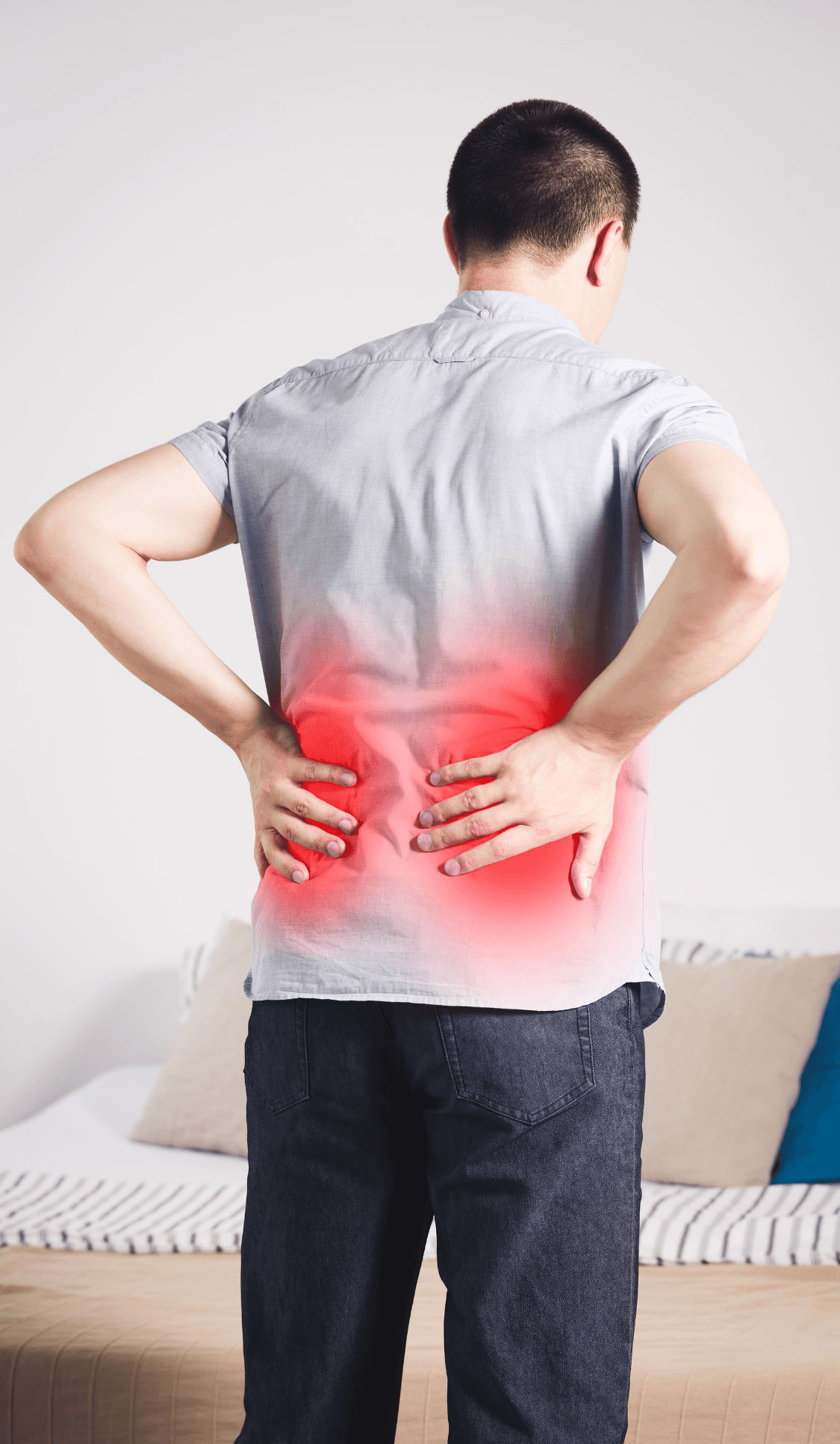
What Does Sciatica Feel Like? Symptoms to Watch For
Sciatica has a distinctive symptom pattern that separates it from general back pain. Recognising these patterns helps you understand what you are dealing with, and when to act.
-
Radiating leg pain: Pain that starts in the lower back or buttock and travels down the back of one leg, sometimes reaching the calf or foot. This is the defining symptom of sciatica.
-
Sharp, burning, or electric sensation: Unlike the dull ache of muscle pain, sciatica often produces sharp, shooting, or burning pain along the leg that can be sudden and intense.
-
Numbness or tingling: A pins-and-needles sensation or complete numbness in the leg, calf, or foot. Indicates nerve involvement and should always be assessed.
-
Muscle weakness in the leg or foot: Difficulty lifting the foot when walking, weakness in the calf, or a feeling that the leg is unreliable. This indicates nerve compression affecting motor function.
-
Pain that worsens with sitting: Sciatica is typically worst when sitting, especially on hard surfaces, and improves temporarily with walking or lying down.
-
Pain on one side only: Classic sciatica typically affects one leg. Pain in both legs may suggest a different cause such as spinal stenosis and requires specific assessment.
-
Pain that does not improve with rest or medication: If your leg pain persists despite painkillers, rest, or basic stretching, it almost certainly requires proper root-cause assessment and treatment.
Loss of bladder or bowel control, numbness in the groin or inner thigh (saddle anaesthesia), or rapid progressive weakness in both legs may indicate cauda equina syndrome: a rare but serious medical emergency requiring immediate hospital evaluation. Do not delay.
Sciatica Treatment Options: Which Approach Is Right for You?
When sciatica strikes, patients are typically offered one of three paths: painkillers, injections, or surgery. Here is what the evidence shows about each option compared to root-cause physiotherapy.
| Treatment | How It Works | Long-Term Effectiveness | Side Effects / Risks |
|---|---|---|---|
| Painkillers / NSAIDs | Reduces pain signal and inflammation temporarily | Low: pain returns when medication stops; does not address nerve compression | Gastric ulcers, kidney strain, cardiovascular risk with long-term use |
| Epidural Steroid Injections | Reduces nerve root inflammation for temporary relief | Moderate-low: effect typically lasts weeks to months; compression cause remains | Risk of infection, nerve damage, steroid side effects; limited to 3–4 per year |
| Surgical Discectomy | Removes herniated disc material pressing on the nerve | Variable: short-term outcomes good but long-term re-herniation rate is significant without rehabilitation | Surgical infection, nerve damage, failed back surgery syndrome, anaesthesia risks |
| Generic Physiotherapy (standard exercises) | Builds general strength and flexibility | Low-moderate: improves if the right exercises match the cause; harmful if mismatched | Risk of aggravating symptoms if exercises are not diagnosis-specific |
| Root-Cause Physiotherapy at CMRA | Identifies and corrects the specific cause: disc, piriformis, trigger points, posture, nutrition, stress | High: lasting relief by correcting the actual source of nerve irritation | None: fully non-invasive, drug-free, and personalised |
National Institute for Health and Care Excellence (NICE) guidelines and the American College of Physicians both recommend non-surgical, non-pharmacological approaches as the preferred first-line treatment for sciatica. Surgery should be considered only after structured conservative treatment has been properly exhausted and when there is progressive neurological deficit.
Speak With a Sciatica Specialist in Bangalore
Not sure if your leg pain is true sciatica, piriformis syndrome, or something else? Our specialist will identify the exact cause and walk you through your treatment options clearly: no jargon, no pressure. Serving Whitefield, Brookefield, and AECS Layout.
Mon–Sat 8am–2pm & 5pm–9pm · Sun 8am–2pm · +91 80420 42385
How Does CMRA Treat Sciatica Without Surgery or Drugs?
CMRA's approach to sciatica follows the same principle applied to all pain conditions: find the problem first, then fix it precisely. No machines. No medication. No standard exercise routines applied without diagnosis.
Identify the Exact Source
We conduct a thorough assessment to determine whether your sciatica is caused by disc compression, piriformis tightness, trigger points, SI joint dysfunction, or a combination: before selecting any technique.
Relieve Nerve Pressure
Using targeted soft tissue release, nerve mobilisation, trigger point therapy, and muscle rebalancing, we systematically reduce the compression or irritation producing your nerve pain.
Correct and Prevent Recurrence
Postural correction, core stability, lumbar mechanics retraining, and lifestyle modification ensure the conditions that caused sciatica do not return after treatment ends.
Specific Techniques Used at CMRA for Sciatica
-
Sciatic Nerve Mobilisation: Gentle, graduated techniques that restore the nerve's ability to glide freely within its tissue channels, reducing mechanical sensitivity and radiating pain.
-
Piriformis and Deep Gluteal Release: Targeted manual release and trigger point deactivation in the piriformis and deep hip rotators, which are the most common muscular source of sciatic compression. See our trigger point pain therapy service.
-
Lumbar Disc Decompression Techniques: For disc-related sciatica, positional therapy and manual techniques that reduce disc pressure and allow disc material to retract away from the nerve root.
-
Core and Lumbar Stabilisation: Rebuilding the deep core muscles that protect the lumbar discs and nerve roots from the mechanical loads of daily activity and sitting.
-
Postural and Gait Correction: Correcting the movement habits and postural patterns, particularly from desk work, that are repeatedly stressing the lumbar spine and sciatic nerve pathway.
-
NAET-Based Nutritional Correction: Nutritional deficiencies, particularly Vitamin B12, Vitamin D, and magnesium, directly impair nerve health and recovery. CMRA identifies and addresses these as part of every sciatica plan.
-
Emotional Stress Correction: Chronic stress keeps the nervous system in a heightened state, significantly amplifying sciatica pain and slowing nerve recovery. Our emotional resetting programme addresses this directly using NAET and NLP methods.

How Do You Know If Your Sciatica Is a Disc Problem or Piriformis Syndrome?
This is one of the most practically important questions in sciatica management, because the treatment approach differs significantly. Here is a guide to help you recognise the pattern, though a proper clinical assessment at CMRA will always give you the definitive answer.
| Feature | Disc-Related Sciatica | Piriformis Syndrome |
|---|---|---|
| Pain location | Lower back into buttock and down the leg, often past the knee to calf/foot | Deep in the buttock, may radiate down the back of the thigh, often does not go past the knee |
| Aggravated by | Forward bending, coughing, sneezing, prolonged sitting | Sitting, climbing stairs, hip rotation activities, crossing legs |
| Relieved by | Walking, extension movements, lying flat | Stretching the hip, standing, heat to the buttock |
| Onset | Often follows a specific incident such as lifting or bending, or develops with prolonged desk work | Gradual onset, often linked to sustained sitting or a new exercise habit |
| MRI findings | Disc herniation or protrusion at relevant level | Usually normal: piriformis syndrome does not show on standard lumbar MRI |
| CMRA treatment focus | Disc decompression, nerve mobilisation, core stabilisation | Piriformis release, trigger point deactivation, hip mobility correction |
A normal MRI does not mean there is nothing wrong. Piriformis syndrome, sacroiliac joint dysfunction, and trigger point-referred pain are all clinical diagnoses that standard imaging cannot detect. Many patients with a normal MRI continue to suffer because their actual cause was never identified. CMRA's clinical assessment specifically evaluates these non-imaging causes.
What Should You Do — and Avoid — When You Have Sciatica?
While you are waiting for or undergoing treatment, these guidelines will help you manage sciatica symptoms and avoid making the condition worse.
What to Do
-
Keep moving gently. Short walks of 10 to 15 minutes are better for sciatica than bed rest. Bed rest for more than a day or two is no longer recommended and actually slows recovery.
-
Alternate sitting and standing. Limit unbroken sitting to 30 to 45 minutes at a time. Stand up, walk briefly, and change position regularly throughout the day.
-
Apply heat to the buttock and lower back. A warm compress (not ice during the chronic phase) helps reduce muscle spasm and improve blood flow to the compressed area.
-
Sleep in a supported position. Lying on your side with a pillow between your knees reduces torsional stress on the lumbar spine and sciatic nerve during sleep.
What to Avoid
Sitting compresses both the lumbar discs and the piriformis onto the sciatic nerve. Extended sitting is the single biggest aggravator of most sciatica patterns.
This position rotates the hip outward and increases piriformis compression directly onto the sciatic nerve. It can trigger an acute flare within minutes.
For disc-related sciatica, forward bending stretches significantly increase disc pressure and worsen nerve root compression. Avoid without guidance from your specialist.
Running, jumping, and heavy weight training put repeated compressive loads on the lumbar discs and should be avoided until the underlying cause has been treated and resolved.

Mr. Jamline Scaria
Physiotherapist · NAET Practitioner · NLP Practitioner
With over 25 years of experience in non-drug pain care, Mr. Jamline Scaria has helped thousands of patients in Bangalore recover from sciatica, back pain, neck pain, and complex chronic pain: without surgery, injections, or medication. His approach identifies the specific cause of each patient's sciatica before selecting any treatment technique.
Trusted by patients from Whitefield, Brookefield, AECS Layout, and across Bangalore. Consistent results in cases where standard treatment, MRI-guided injections, and surgical consultations have not provided lasting relief.
Frequently Asked Questions About Sciatica Treatment in Bangalore
What is sciatica and what causes it?
Sciatica is pain that radiates from the lower back through the buttock and down one leg along the sciatic nerve pathway. Common causes include a herniated lumbar disc, piriformis muscle tightness, sacroiliac joint dysfunction, spinal stenosis, and myofascial trigger points. Identifying the specific cause is essential: different causes require different treatment approaches.
Can sciatica be treated without surgery in Bangalore?
Yes. Around 90% of sciatica cases resolve without surgery with proper conservative treatment. CMRA in AECS Layout treats sciatica using root-cause physiotherapy: identifying and correcting the specific source of nerve compression without drugs, injections, or surgery. Most patients notice clear improvement within 3 to 6 sessions.
Is sciatica always caused by a disc problem?
No. While a herniated disc is a well-known cause, sciatica is frequently caused by piriformis muscle tightness, sacroiliac joint dysfunction, trigger points in the gluteal muscles, or spinal stenosis: none of which involve the disc. A normal MRI does not rule out sciatica. CMRA's clinical assessment evaluates all these causes.
How long does sciatica take to heal with physiotherapy?
Most patients at CMRA notice significant improvement within 3 to 6 sessions. Full recovery typically takes 4 to 12 weeks depending on the cause, severity, and duration of the nerve compression. A personalised recovery timeline is given after the first assessment.
What are the warning signs that sciatica needs urgent attention?
Seek urgent medical attention if you have loss of bladder or bowel control, numbness in the groin or inner thigh, or rapid progressive weakness in both legs. These may indicate cauda equina syndrome, which requires emergency evaluation. For sciatica without these features, book a specialist assessment promptly but not on an emergency basis.
Will sciatica come back after treatment at CMRA?
If the root cause is fully corrected and the prevention guidance is followed, recurrence is uncommon. CMRA's treatment includes correction exercises, postural retraining, workstation guidance, and lifestyle modification specifically designed to prevent the conditions that caused sciatica from returning. Patients who maintain their recovery habits have very low recurrence rates.
Can physiotherapy make sciatica worse?
Generic physiotherapy applied without accurate diagnosis can worsen sciatica, particularly if forward-bending exercises are prescribed for disc-related sciatica, or if piriformis syndrome is treated as a disc problem. At CMRA, no treatment begins until the specific cause of your sciatica is identified. This is why accurate assessment is the first and most important step.
Where can I get sciatica treatment near Whitefield Bangalore?
CMRA is at 1342, 60 Feet Road, AECS Layout – D Block, Mahadevapura Post, Bengaluru 560037, easily accessible from Whitefield and Brookefield via the 60 Feet Road corridor. Mon–Sat 8am–2pm and 5pm–9pm, Sunday 8am–2pm. Book via WhatsApp at wa.link/66txco or call +91 80420 42385.
Sciatica Is Treatable: You Do Not Have to Live With Leg Pain
Sciatica is one of the most painful and debilitating conditions affecting Bangalore's working population, but it is not a life sentence. The large majority of cases resolve completely with the right non-surgical approach, applied with precision to the specific cause identified in each patient.
The most common reason sciatica does not resolve is not that the condition is severe: it is that the cause was never properly identified, and the treatment was generic rather than specific. Whether your sciatica is from a herniated disc, piriformis tightness, trigger points, or sacroiliac dysfunction, the correct approach is available and effective.
At CMRA, we have helped thousands of patients in Bangalore recover from sciatica over 25 years, without surgery, without long-term painkillers, and without standard routines. If you are in Whitefield, Brookefield, AECS Layout, or anywhere in Bangalore, book your assessment and find out exactly what is causing your pain.
Start Your Recovery Journey Today
Book your ₹799 first-visit assessment at CMRA. We will find the exact cause of your sciatica and give you a clear, drug-free, personalised plan for lasting recovery. Serving AECS Layout, Whitefield, Brookefield, and all of Bangalore.
CMRA · 1342, 60 Feet Rd, AECS Layout-D Block, Bengaluru 560037 · +91 80420 42385